On 4 November 2008, US regulator the FCC was due to vote on opening up “TV white spaces” – the UHF guardband spectrum block between broadcast TV channels – to unlicensed devices. This was the same day as the 2008 presidential election.
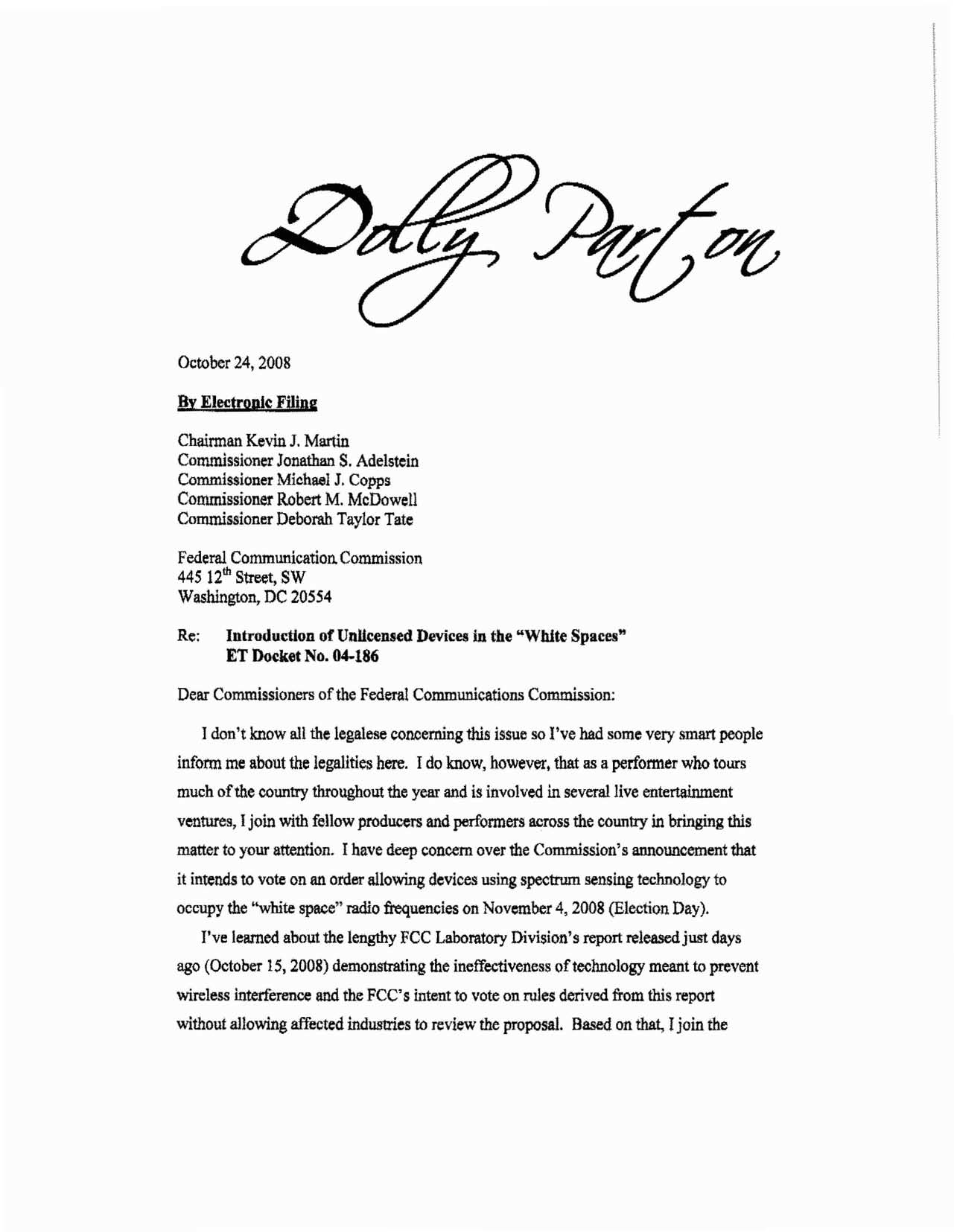
Parton wrote to the regulator about it. “I don’t know all the legalese concerning this issue, so I’ve had some very smart people inform me about the legalities here,” she said. This was, of course, covered in PolicyTracker. It was one of our most-read stories of the year.
She joined the National Association of Broadcasters’ emergency request to delay the vote. Concerns had already been raised by the Sports Technology Alliance, Harrah’s Entertainment, The Broadway League and several members of Congress. Some outlets even reported she had an unlikely ally in megachurch pastor Joel Osteen. The key issue was the potential for interference with the wireless microphones their venues depended on.
Parton’s objection centred on an FCC report, released on 15 October, that she said showed anti-interference technology wasn’t reliable and on the Commission’s plan to vote on it, unamended, on election day.
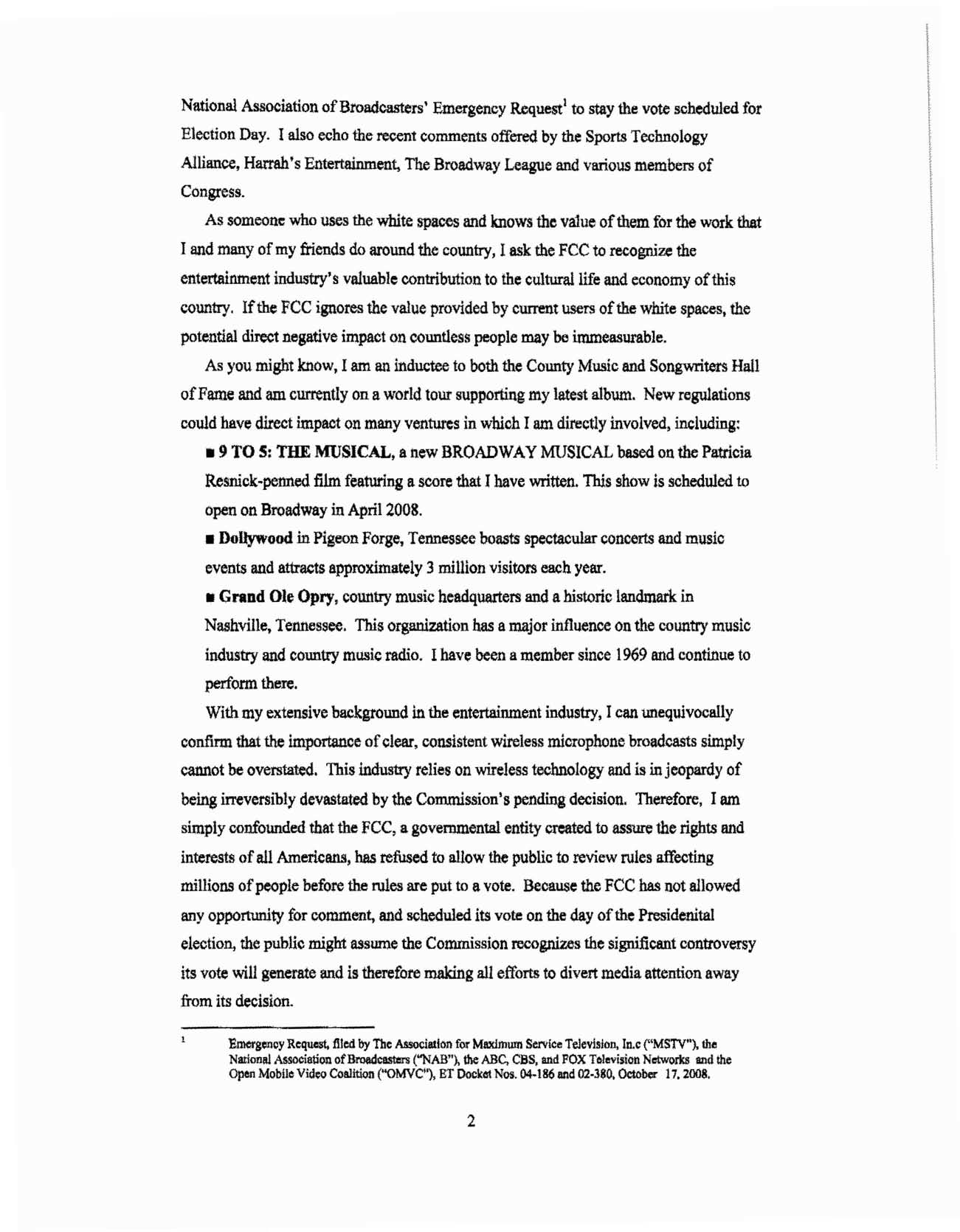
She asked the FCC to “recognize the entertainment industry’s valuable contribution to the cultural life and economy of this country,” naming the ventures she was particularly worried about:
- Dollywood (“approximately 3 million visitors each year”)
- The Grand Ole Opry (Parton had been a member since 1969),
- 9 to 5: The Musical, for which she’d written the score
On the other side of the argument stood industry giants Google, Microsoft, Dell and Motorola. They were pushing for the white spaces to be unlicensed and open to all, promising cheap rural broadband.
Google’s Eric Schmidt wrote to the FCC accusing opponents of “stalling tactics to derail the technology” while Dell’s Michael Dell predicted the order would “trigger a boom in investment, job creation and consumer demand” in the technology sector.
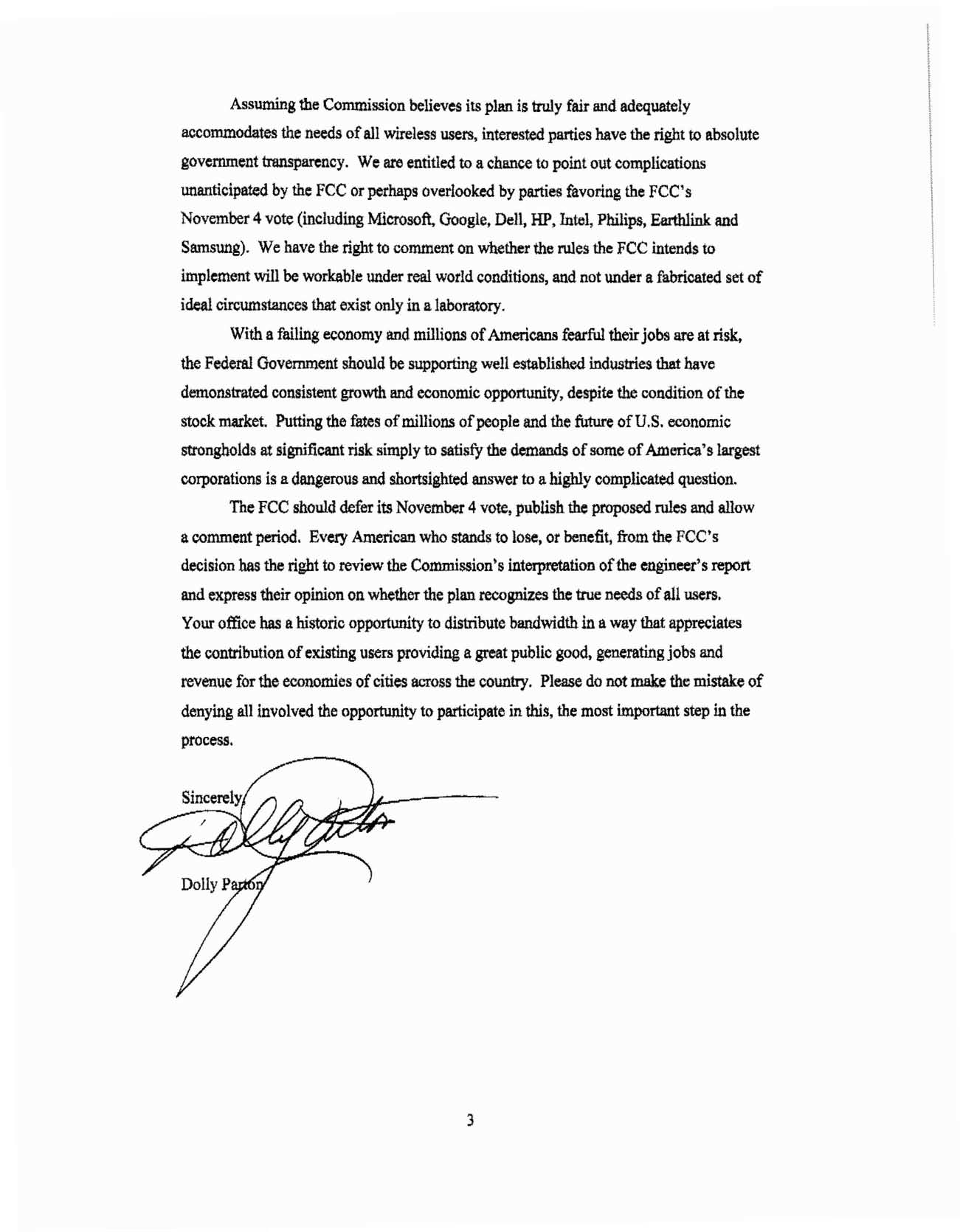
Parton named Microsoft, Google, Dell, HP, Intel, Philips, EarthLink and Samsung in her own letter as the parties standing to benefit from the move, and suggested that timing the vote for election day, when most attention would be elsewhere, was deliberate.
The FCC approved the white spaces rules on schedule, and NAB’s subsequent legal challenge did not succeed.
Eighteen years on, a similar discussion on UHF spectrum continues, mostly in Europe, and focusing on the 600 MHz band. At the time, Parton put a famous name and a face to a claim regulators still have to consider: that some spectrum carries cultural value that doesn’t show up on a balance sheet. That argument might not have won in the US in 2008, but it hasn’t gone away either.
Here’s what else PolicyTracker covered this week:
- Exclusive feature and interviews: What do the candidates for Director of the ITUThe International Telecommunication U… Radiocommunication Bureau stand for?
- Thailand’s Prime Minister has taken steps to oust the chair of the regulator responsible for spectrum, the NBTC
- Mexico is preparing an auction of spectrum for industrial 5G
- The UK regulator is consulting on extra spectrum for drones and a new licence for drone detection systems.
- Established US satellite operator Iridium and aerospace company Rocket Lab have submitted their full proposal and cleared initial hurdles for a proposed $8 billion merger