Blog
Weekly Wrap: Is the EU’s new code of conduct for sustainable telecoms a missed opportunity?
Will the new "code of conduct for the sustainability of telecommunications networks" have any impact?
The code of conduct, recently published by the European Commission, promises to codify energy measurement standards and carbon footprint frameworks and tailor them to the telecoms industry, so that operators in the European Union can consistently measure and report on the environmental sustainability of their networks.
The idea was initially introduced in the European Commission’s 2022 Digitalising the Energy System Action Plan. It was also mentioned in the Commission’s recent proposal for a Digital Networks Act (DNA).
Previously, with operators keeping track of their sustainability targets using a variety of standards, it was difficult to assess the impact of telecoms companies on the climate. The code selects eight different indicators to measure carbon footprint: Energy consumption, Energy efficiency, GHG Scope 1, 2 and 3, Renewable energy, E-waste, and the Distribution or utilisation of recycled/refurbished/reused products.
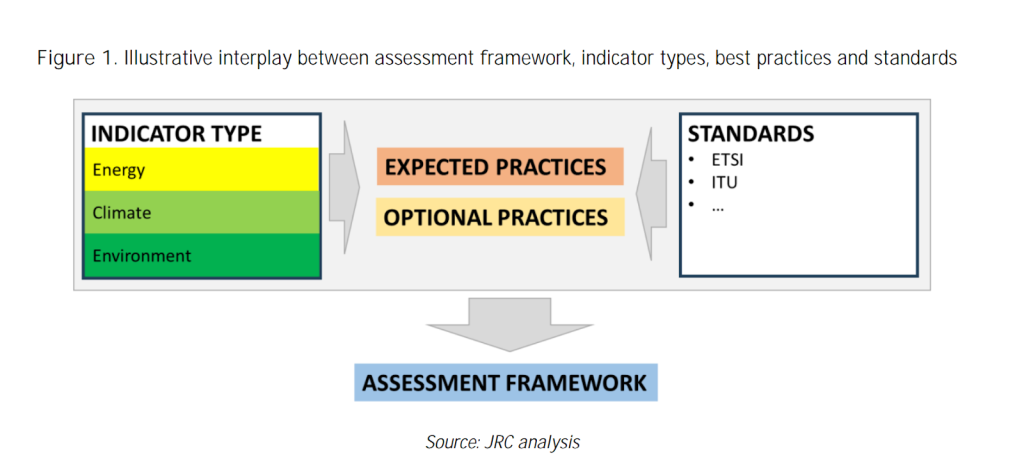
Mobile network operators that adhere to the code will have to report on their energy consumption levels and on the amount of electronic waste generated by their infrastructure. Data should be published from 2027 onwards. With defined practices, operators should be able to monitor improvements, and auditors can check compliance, eventually making telecoms networks more sustainable in the long run.
Taxonomy is mentioned in the code of conduct because it refers to the EU taxonomy for sustainable finance, which is how economic activities become labelled as sustainable. The code, however, mentions it as a hypothetical use case.
At the moment, mobile networks are not included in the current EU taxonomy rules. It might take some time before they are.
One issue with the code is that it is not enforceable. It does not say how regulators should check compliance or how the reporting from the mobile operator side should be carried out. It is still unclear how the data will be used by regulators.
All of this can still change in the future. “The optional practices… may become expected as things evolve in the future,” the code states.
Here’s what else PolicyTracker reported on this week:
- Grameenphone was the only bidder in Bangladesh’s auction of the 700 MHz band
- We’ve spoken to several experts about the Iran-Starlink spoofing incidents
- Spain is consulting on a new decree designed to strengthen the resilience of telecoms networks
- Eurocontrol comments on new altimeter standards and their potential impact on mobile networks
- As 2G and 3G are retired, regulators and operators are struggling to ensure that VoLTE and VoNR can reliably support emergency calls
By |
Camilla Mina
Experts talk spectrum.
Listen Now
Training
Understanding Modern Spectrum Management
An overview of the key engineering, legal and policy issues
Read more
Spectrum Research Service
- Dossiers new
- Benchmarking new
- Spectrum database
-
Research notes