Blog
Weekly Wrap: Apple drops mmWave support in new iPhone model
The new iPhone Air won’t support mmWave spectrum at all, even in the US market.
At its annual iPhone event this week, Apple unveiled a number of new models. The most headline-grabbing of them all is the iPhone Air, a new device whose key characteristic is how thin it is at 5.6 mm.
Unlike the other models released, the iPhone Air won’t support mmWave spectrum bands such as 26 GHz and 40 GHz. This is the second iPhone to drop support for these bands since the iPhone 16e earlier this year.
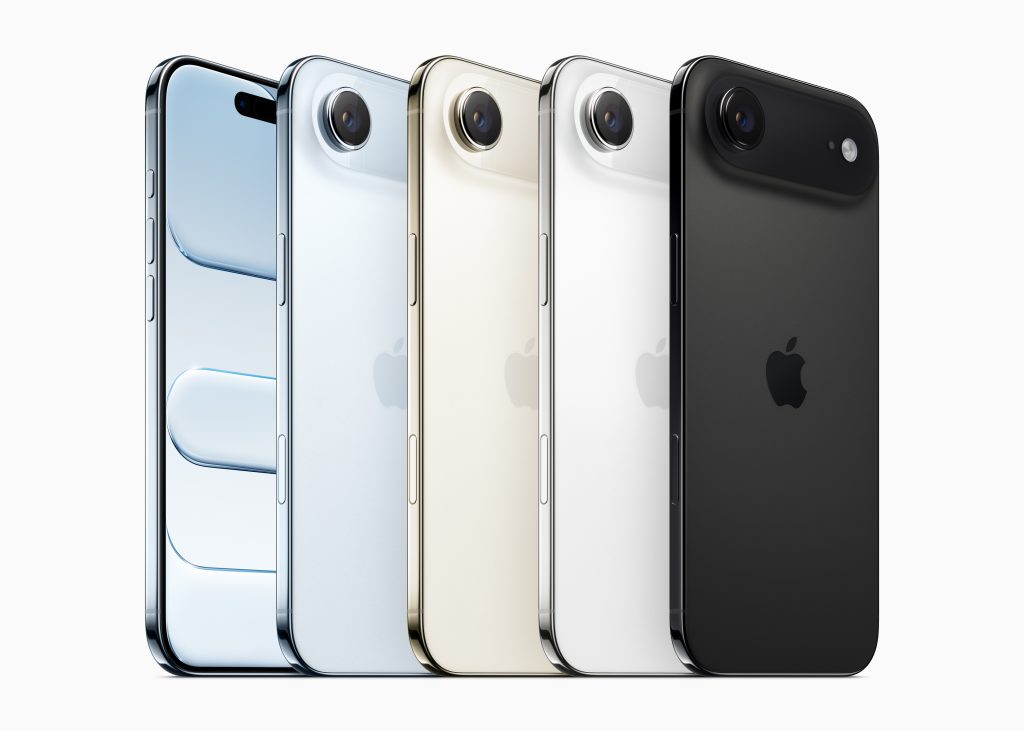
mmWave bands were only ever supported in models sold in the US. Apple has never supported ultra-high frequency bands in international models, including those sold in Europe.
The lack of mmWave support is connected to the company’s choice of modem. The Air comes with Apple’s in-house C1X modem, a new version of the C1 first introduced with the iPhone 16e earlier this year.
Many analysts assumed that by the time the new iPhones were announced, Apple would have added support for mmWave bands. Yet despite the C1X being the second iteration of this new modem, it still doesn’t support ultra-high frequencies.
Apple has been working to develop its own modems in a bid to replace those developed by Qualcomm. A key incentive for the company was to improve battery life. It’s not surprising that when developing an ultra-thin iPhone, Apple appears to have prioritised power efficiency over mmWave support.

All the other iPhones unveiled this week use Qualcomm modems and therefore still support mmWave spectrum in the US. Yet it’s still notable that when introducing a brand new model, particularly one intended to shore up interest in their products, Apple felt able to forgo mmWave support.
As usual, none of the non-US models will support mmWave bands, even though countries like the UK are looking to auction 26 GHz and 40 GHz next month. Even though more European operators are gaining access to these frequencies, they appear to have little incentive to deploy them on their networks.
Here’s what else PolicyTracker covered this week:
- Paraguay’s two largest operators, Tigo and Personal, were left out of Paraguay’s 3.5 GHz assignment due to rules excluding Chinese vendors.
- EchoStar has sold 50 MHz of satellite spectrum to SpaceX for $17 billion, in a deal that will have major implications for its competitors and the upcoming MSSMobile-satellite service (MSS) describes a… authorisation in Europe.
- The Russian regulator has awarded spectrum licences to three operators in occupied Crimea.
- Pressure is rising on maritime navigational systems as anomalies (such as the “ghost ship” on the Thames) and interference issues increase.
- In the second edition of “The End of Telecoms History”, William Webb and co-author Dennis Roberson set out to address both the rise of AI and the criticisms levelled at the original version of the book.
By |
Richard Haas
Richard is a journalist and analyst at PolicyTracker. Apart from writing about spectrum policy news, his main responsibilities include maintaining the PolicyTracker Spectrum Database and producing the Spectrum Podcast. Richard is fluent in English and German.

Experts talk spectrum.
Listen Now
Spectrum Research Service
- Dossiers new
- Benchmarking new
- Spectrum database
-
Research notes